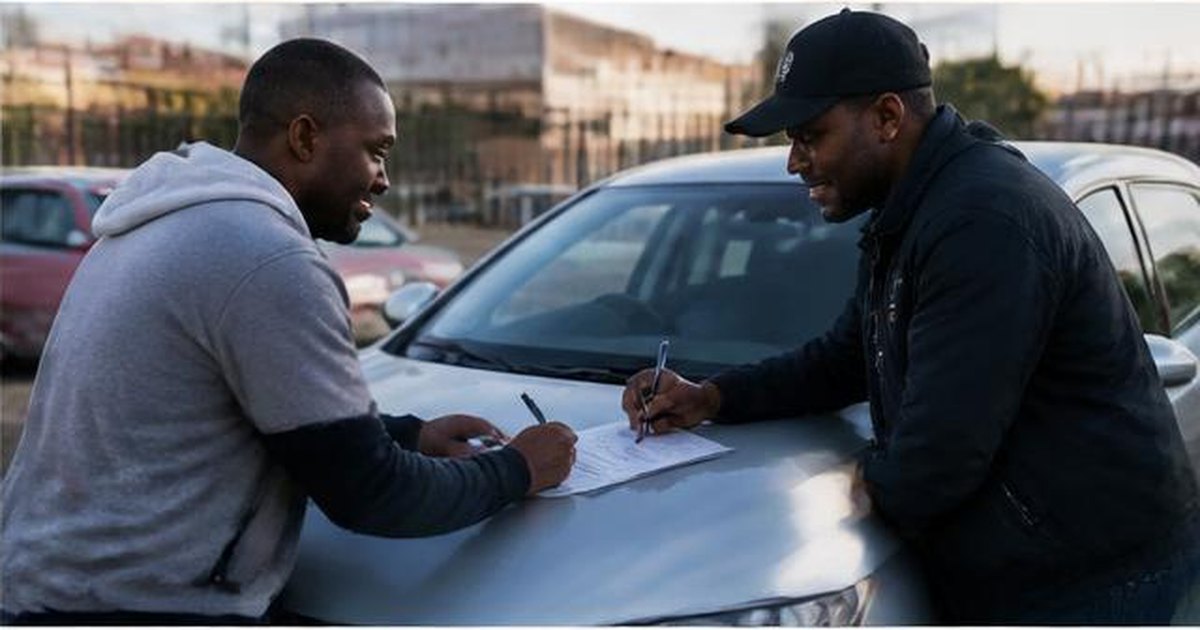
Registering a Vehicle in Your Name After a Sale (Change of Ownership)
When you buy or sell a vehicle in South Africa, the sale is not finished until the vehicle's registration record on the national eNaTIS system is updated. Until that happens, the previous owner's name stays on the record — which means their unpaid fines can follow the car, and your new traffic fines can keep landing on their desk. The National Road Traffic Act 93 of 1996 sets out both sides' duties, and they have strict deadlines.
The two sides of the deal
A change of ownership involves two separate legal duties:
- The seller must notify the authorities that they no longer own the vehicle, within 21 days of the sale, by submitting a Notification of Change of Ownership (form NCO) to a registering authority. This protects the seller: once the NCO is lodged, liability for the vehicle's licence fees and traffic offences moves to the buyer.
- The buyer must register and license the vehicle in their own name within 21 days of acquiring it, using the Application for Registration and Licensing of Motor Vehicle (form RLV).
If you sold a car and never submitted the NCO, do it now — even years late. Until you do, you remain the recorded owner and can be held responsible for the vehicle's arrears.
Documents the buyer needs
Take the following to your nearest registering authority (usually your local municipal licensing office or a DLTC that handles licensing):
- Your green barcoded ID book or smart ID card
- Proof of residential address no older than three months (with an affidavit from the account holder if the bill is not in your name)
- The completed RLV form
- The vehicle's registration certificate (the paper logbook) from the seller — if lost, the seller should first apply for a duplicate
- A valid roadworthy certificate, if one is required (see below)
- The seller's submitted NCO details, or proof that they lodged it
- The registration and licence fee (varies by province and vehicle weight)
Documents the seller needs
- Your ID
- The completed NCO form, submitted to a registering authority within 21 days of the sale
- The vehicle's registration certificate, which you hand to the buyer
- Keep a copy of the receipted NCO — it is your proof that you reported the sale
When is a roadworthy certificate needed?
A change of ownership generally triggers the requirement for a roadworthy certificate (RWC), issued by an approved testing station after the vehicle passes inspection. There are limited exemptions — for example certain transfers between spouses or when a dealer takes a vehicle into stock — but for an ordinary private sale, budget for the roadworthy test. An RWC is valid for a limited period (commonly cited as 60 days) for licensing purposes, so time your test close to the registration date.
Step by step for the buyer
- Collect the paperwork from the seller at handover: the registration certificate, a copy of their ID, and confirmation that they have submitted (or will submit) the NCO.
- Get a roadworthy certificate from an approved testing station if required.
- Complete form RLV — available at the registering authority or downloadable from eNaTIS-related provincial sites.
- Go to the registering authority within 21 days with your documents and pay the registration and licence fees. If the vehicle's licence disc has also expired, you will pay the renewal (and any arrears) at the same time.
- Receive your new registration certificate and licence disc in your name, usually on the same day for standard transactions.
Step by step for the seller
- Complete form NCO on the day of sale — do not leave it to the buyer.
- Submit it at any registering authority within 21 days and get a receipted copy.
- Hand over the registration certificate and a copy of your ID to the buyer.
- Never cancel your own responsibility informally: a WhatsApp message or a written "sold as is" note does not update eNaTIS. Only the NCO does.
Buying from a dealer or with bank finance
If a dealer sells you a vehicle, the dealer usually handles the registration paperwork for a fee. If the vehicle is financed, the bank holds the registration certificate as titleholder, and the vehicle is registered in your name with the bank recorded as titleholder — you still complete the RLV process, but the bank must release the certificate first. When you finish paying off a vehicle, remember to have the bank removed as titleholder, or you will hit a wall the day you try to sell.
What it costs
Fees are set provincially and depend mainly on the vehicle's tare weight. Expect a combination of a registration fee and a licence fee, with commonly cited totals for an ordinary passenger car in the region of a few hundred rand, plus the roadworthy test fee if applicable. Confirm current amounts with your registering authority before you go.
Common mistakes
- Assuming the buyer/seller "handled it" — both parties have their own form and their own 21-day duty
- Losing the registration certificate — a duplicate must be applied for before transfer, which delays everything
- An RWC that has expired by the time you reach the counter
- Unpaid licence arrears discovered at registration, which must be settled first
- Proof of address older than three months or not in your name without a supporting affidavit
Sources
- National Road Traffic Act 93 of 1996 (gov.za)
- eNaTIS — online.natis.gov.za
- Road Traffic Management Corporation (rtmc.co.za)
- Your provincial Department of Transport / local registering authority
This guide is general information, not legal advice. Forms, fees and procedures are set by the Road Traffic Management Corporation and provincial registering authorities — confirm current requirements before your visit.