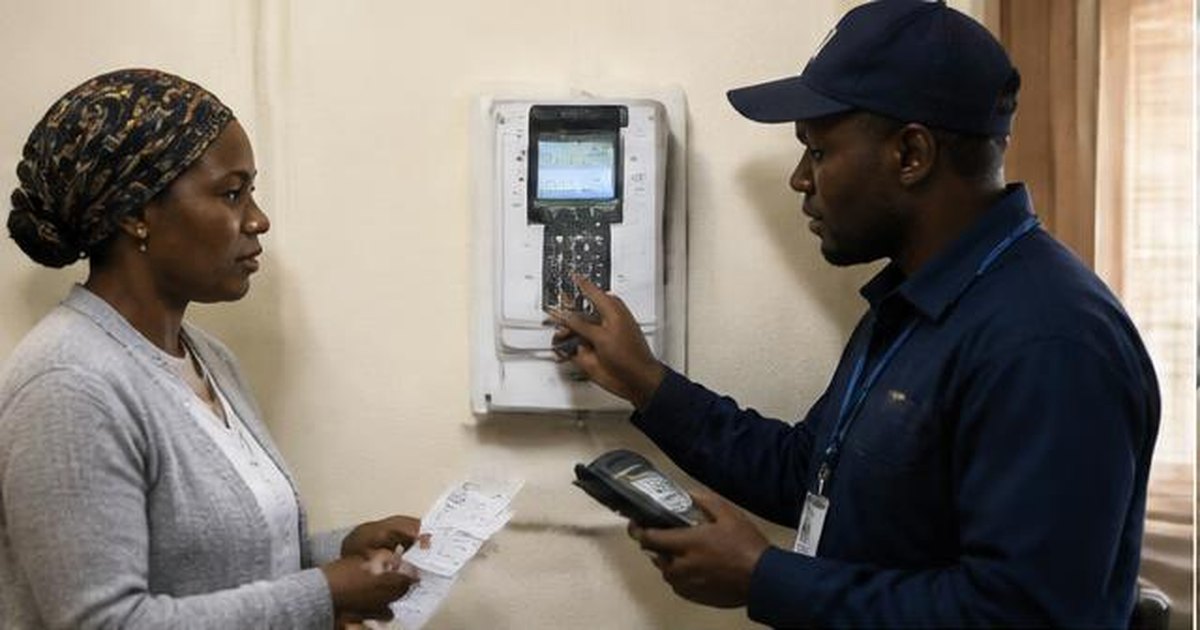
How to Register for Prepaid Electricity at Your Municipality
Prepaid electricity is the default way most South African households manage their power — buy what you need, load it onto the meter, and there's no surprise bill at the end of the month. But before you can start topping up, you need to register the connection with the right supplier. That first step trips a lot of people up, mainly because South Africa doesn't have one single electricity provider — and applying to the wrong one wastes time. Here's how to get it right.
Step 1: Work Out Who Actually Supplies Your Electricity
This is the single most important thing to establish before you do anything else. South Africa's electricity is supplied by two different kinds of entities, and which one applies to you depends entirely on where the property sits — not on preference.
- Local municipalities supply electricity in most urban and metro areas — for example, City Power in Johannesburg, the City of Cape Town's Electricity Department, eThekwini (Durban), and the City of Tshwane (Pretoria).
- Eskom supplies electricity directly in many non-metro, rural, and peri-urban areas, and in some pockets that fall inside a municipal boundary but outside that municipality's electricity licence area.
Confusingly, in some cities — Cape Town is a notable example — both the municipality and Eskom hold supply licences for different pockets of the same metro area, so two neighbouring streets can have different suppliers. If you apply to the wrong one, your application will simply be rejected and redirected, costing you time. Check your most recent electricity bill (if there's an existing connection) or ask your municipality's call centre which entity supplies your specific address before applying anywhere.
Step 2: Confirm the Property Is Ready for a Connection
Before a municipality or Eskom will process an application, the property generally needs to already have:
- Existing electricity reticulation — infrastructure must already run to the area; a brand-new development in an unserviced area may require a separate, longer process for infrastructure to be extended
- A cable already laid to the property boundary, installed specifically for supplying that property
- A valid Certificate of Compliance (CoC) for the property's electrical installation, issued by a registered electrician, confirming the wiring meets safety standards — this is a legal requirement, not optional paperwork
If any of these aren't in place, you'll need to arrange them (typically through a registered electrician for the CoC, or via the municipality's infrastructure department for reticulation) before a meter can be installed.
Step 3: Gather Your Documents
Requirements differ slightly by municipality, but the core set is consistent almost everywhere:
- Proof of identity — your South African ID or passport (original and copy)
- Proof of ownership — if you own the property, this is typically the title deed or a recent rates account in your name. The applicant must generally be the property owner, since the account is tied to the property and its municipal billing history.
- If you're not the owner (e.g. you're a tenant) — a copy of the lease agreement, plus written consent from the owner, is generally required, since municipalities are cautious about opening new accounts for non-owners
- Proof of residence — a recent utility bill, lease agreement, or in some cases an affidavit
- Certificate of Compliance for the electrical installation
- Any municipal-specific application form, usually available at the municipal customer service office or via its website
Step 4: Submit Your Application
You can generally apply through one of these channels, depending on your municipality:
- In person, at your municipal electricity department's customer service centre or "walk-in centre"
- By phone, through the municipality's service hotline (for example, City Power in Johannesburg's hotline)
- Online, through the municipality's official website, where this option is available
- For Eskom-supplied areas, via the Eskom website or app, or by calling the Eskom National Call Centre on 08600 37566 (086 00 ESKOM)
Step 5: Choose Your Tariff
As a residential customer, you'll typically be offered a choice between tariff structures — commonly a lifeline tariff (a lower, subsidised rate structured for basic household consumption) or a standard domestic tariff. Business or commercial customers are generally billed based on expected monthly consumption rather than a lifeline rate. Ask your municipality which tariff options apply to your account type and consumption profile before finalising the application, since this affects your cost per unit going forward.
Step 6: Meter Installation
Once your application and documents are approved:
- Council/municipal meters (owned by the municipality or Eskom) are typically installed in free-standing residential properties, and installation timelines can range from a few weeks to considerably longer depending on the municipality's backlog.
- Private prepaid sub-meters are common in rental units, sectional title schemes, garden flats, or subdivided properties, where the landlord or body corporate holds the main municipal account and recovers usage costs from individual occupants through a private sub-meter. These are typically installed faster, often within days, since they don't depend on municipal installation queues — but they operate outside the municipal billing system entirely, so make sure you understand which type applies to you.
All electrical work, including sub-meter wiring, must be carried out by a registered electrician. Incorrect wiring — particularly reversing supply and load terminals on a sub-meter — is a common cause of malfunctions and unexplained lockouts.
Registering for Free Basic Electricity (FBE), If You Qualify
Once your prepaid connection is active, low-income households may separately qualify for Free Basic Electricity (FBE) — a monthly allocation of free units, credited automatically to a qualifying account once approved. This is a distinct registration from the electricity connection itself, and generally requires:
- Proof of identity
- Proof of income (recent payslips, an unemployment certificate, or proof of a social grant such as SASSA payments)
- Proof of residence matching the electricity account address
FBE eligibility criteria and the monthly free-unit allocation are set by each municipality individually and reviewed periodically, so confirm current thresholds and the application process with your specific municipality's electricity or indigent support department.
If You're Adding Solar (Grid-Tied Systems)
If your household already has, or is planning, a grid-tied solar system, this requires a separate registration process — known as Small-Scale Embedded Generation (SSEG) registration — with the same supplier (municipality or Eskom) that supplies your prepaid electricity. National regulation requires all grid-connected solar systems under 100kW to be registered, and doing so typically requires a compliant, NRS-097-2-1 approved inverter and a valid electrical Certificate of Compliance before a municipality will approve the application. This is a distinct process from the standard prepaid electricity registration covered above, with its own fees, forms, and processing timelines that vary considerably between municipalities.
FAQ
How do I know whether my electricity is supplied by my municipality or by Eskom? Check a recent electricity bill if you already have one, since the supplier will be named on it. If you don't have an existing bill, contact your municipality's electricity department or customer service line and ask directly — supply areas can vary block by block even within the same city.
What documents do I need to register for prepaid electricity? Generally: your South African ID or passport, proof of property ownership (or a lease agreement plus owner consent if you're a tenant), proof of residence, and a valid Certificate of Compliance for the property's electrical installation.
Can a tenant apply for a prepaid electricity connection? In most cases, the account holder needs to be the property owner, since the account is tied to the property's municipal billing history. Tenants can generally apply with a copy of their lease agreement and written consent from the property owner, though requirements vary by municipality.
What is a Certificate of Compliance, and why do I need one? It's a legally required document, issued by a registered electrician, confirming that a property's electrical installation meets required safety standards. Municipalities and Eskom will not connect or register a new supply without a valid CoC.
How long does it take to get a prepaid meter installed? It varies significantly by municipality and by meter type. Municipal (council) meters can take anywhere from a few weeks to considerably longer, depending on local backlogs. Private sub-meters, common in rental or sectional title properties, are often installed faster, sometimes within days.
What's the difference between a council meter and a private sub-meter? A council meter is owned by the municipality or Eskom and directly replaces the electricity line item on your municipal account. A private sub-meter is typically installed by a landlord or body corporate, operates independently of the municipal billing system, and is used to recover electricity costs from individual tenants or unit owners.
Can I choose which tariff I'm billed on? Residential customers are generally offered a choice between a lifeline tariff (a lower rate structured for basic consumption) and a standard domestic tariff. Business customers are typically billed based on expected monthly consumption. Confirm the available options with your municipality when you apply.
What is Free Basic Electricity, and is it automatic? It's a monthly allocation of free electricity units for qualifying low-income households, but it isn't automatic — it requires a separate application with proof of income and residence, assessed against your specific municipality's eligibility criteria.
Do I need to register my solar system separately from my prepaid electricity account? Yes. A grid-tied solar system requires its own Small-Scale Embedded Generation (SSEG) registration with your electricity supplier, with its own documentation, fees, and process, distinct from your standard prepaid electricity registration.
What if the property doesn't have electricity infrastructure at all yet? You'll need to check whether the area has existing reticulation and a cable already laid to the property boundary. If not, this typically requires a separate, longer process through the municipality's infrastructure or electrification department before a standard connection application can even be considered.
Who do I contact if I'm not sure which process applies to me? Your municipality's electricity department customer service line, or the Eskom National Call Centre (086 00 ESKOM / 08600 37566) if you're in an Eskom-supplied area, can confirm your specific supplier and the correct application route.
Sources
- City of Tshwane, "New Electricity Connection" — tshwane.gov.za
- Eskom, "Frequently Asked Questions — Prepayment" — eskom.co.za
- Eskom Application Tool and National Call Centre guidance — connect.eskom.co.za
- National Energy Regulator of South Africa (NERSA), Small-Scale Embedded Generation registration requirements
- Electricity Regulation Act 4 of 2006
This article is for general informational purposes and does not constitute legal advice. Application processes, required documents, tariffs, and fees vary by municipality and are updated periodically — confirm current requirements directly with your municipal electricity department or Eskom before applying.