How to Renew Your Driver's Licence Card in South Africa
Unlike your underlying driving licence, which stays valid indefinitely once you've passed your test, the physical card it's printed on has an expiry date. Every South African driver's licence card is valid for five years from its date of issue, and letting it lapse — even though it isn't heavily penalised the way an expired vehicle licence disc is — creates avoidable hassle with insurance, car rental, and international travel. Here's exactly how to renew it.
Why the Card (Not the Licence) Expires
It's worth understanding this distinction, since it explains a lot of the confusion around renewal. Your driving licence — the legal right to drive a given vehicle category — doesn't expire. What expires is the card, the physical smart-card document that serves as your proof of that licence. This system exists mainly so photographs, personal details, and the card's security features stay current. That's why renewal doesn't involve retesting: you're not proving your driving ability again, just refreshing the document and confirming your eyesight and photo are current.
A standard South African driver's licence card, covering the ordinary vehicle codes (motorcycle, light vehicle, and heavy vehicle categories), is valid for five years from the date of issue printed on the card.
When to Start the Renewal Process
Official guidance is to begin your renewal around four weeks before your card's expiry date. Given how consistently booked DLTCs (Driving Licence Testing Centres) tend to be, particularly in metro areas, starting even earlier is sensible — appointment slots on the NaTIS online booking system regularly fill up several weeks in advance.
Step-by-Step: How to Renew
Step 1: Book Your Appointment
You can book a renewal slot through the NaTIS/eNaTIS online booking portal (online.natis.gov.za), which allows you to pre-fill your application form and choose a testing centre and time slot in advance, or you can visit your local DLTC directly, where availability permits walk-ins in some areas, though this is increasingly the exception rather than the rule as more provinces push traffic toward online booking.
Step 2: Gather Your Documents
You'll generally need:
- Your current South African driver's licence card, even if it's already expired
- Your green barcoded ID book or smart ID card (or valid passport, if applicable to your circumstances)
- Proof of residential address — typically a utility bill no older than three months. If the bill isn't in your name, the account holder generally needs to provide a signed affidavit confirming you live at that address, with the bill attached. If you live in an informal settlement without a conventional address, a dated letter from your ward councillor can serve this purpose.
- Two to four recent ID photographs (requirements vary by centre — some DLTCs photograph you on-site instead, but it's safer to bring your own in case theirs isn't available that day)
- Confirmation that you have no outstanding traffic fines or arrears, since unresolved fines can hold up processing at some centres
Step 3: Complete the DL1 Form
The renewal application form is Form DL1, the same form used for original licence applications. If you booked online through NaTIS, this can typically be pre-filled electronically before your appointment, saving time on the day.
Step 4: Take an Eye Test
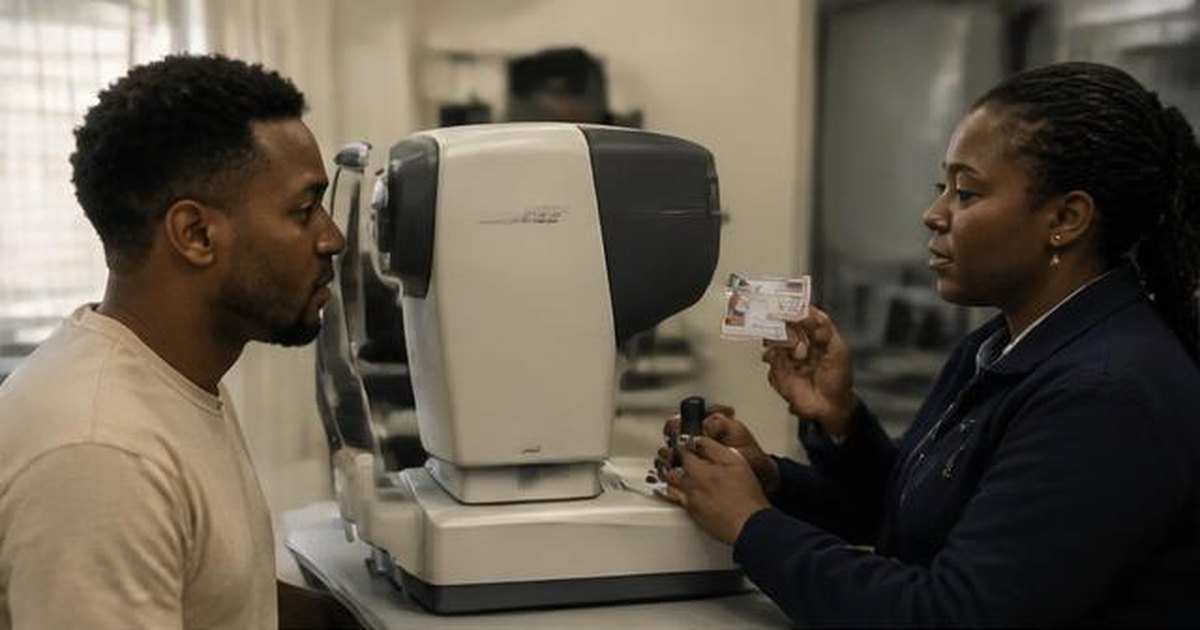
An eye test is required as part of every renewal. You can either have it done at the DLTC on the day of your appointment, or bring an official report from your own registered optometrist, provided it's recent enough to be accepted by the specific centre.
Step 5: Pay the Renewal Fee
Fees for driving licence products are broadly set at a national level but can vary somewhat by province and testing centre, and are reviewed periodically — including a fee adjustment that took effect in January 2026. Commonly cited figures put a standard card renewal in the region of R140 to R250, though this varies enough by province that you should confirm the exact current amount with your specific DLTC before your appointment. Payment methods also vary: some centres are cash-only, others accept card payments at point-of-sale, and if you booked online, payment for the renewal itself is generally still taken in person at the DLTC on the day, not through the booking portal.
Step 6: Submit and Wait for Processing
Once your application, documents, eye test, and payment are complete, a clerk verifies your details against the central eNaTIS record system before processing. Standard processing time for the new card is typically four to six weeks, though this can run longer during periods of high demand or system backlogs. You'll be notified once it's ready for collection at the same DLTC where you applied.
What Happens If Your Card Has Already Expired
South Africa currently allows drivers to continue using an expired card without a formal, automatic late penalty attached specifically to the card's age — but driving on an expired licence card is still not advisable, since it can complicate matters with traffic officials and, more importantly, can create problems with insurance claims if you're ever involved in an accident and your documentation isn't current.
Whether you need a Temporary Driving Licence (TDL) while you wait for your new card depends on timing:
- If you apply on or before your card's expiry date, you generally don't need a TDL — your DL1 application receipt, together with your still-technically-valid (if soon-to-expire) card, serves as adequate proof that you're in the renewal process.
- If your card has already expired before you apply, or expires before your new card arrives, a TDL becomes the sensible option. It's available at the DLTC for an additional fee (commonly cited in the region of R54–R150, depending on the source and province) and is generally valid for up to a year, in case your new card is delayed. If your new card still hasn't arrived by the time the TDL itself is due to expire, it can typically be renewed once more at the DLTC.
Carry both the TDL and a copy of your DL1 application receipt with you at all times if you're relying on this interim documentation, since it's what you'll need to show if a traffic officer asks for your licence.
A Note on Fees and Requirements Varying by Province
Because DLTCs are administered provincially, exact fees, accepted payment methods, and even some document requirements can differ meaningfully between, say, Gauteng, the Western Cape, and KwaZulu-Natal. Treat any specific rand figure you read (including in this article) as an indicative estimate, and confirm the exact current amount and accepted payment method with your local DLTC before your appointment, ideally when you book.
FAQ
How long is a South African driver's licence card valid for? Five years from the date of issue printed on the card. The underlying driving licence itself doesn't expire — only the physical card does.
Do I need to retake any test to renew my licence card? No. Renewal doesn't require rewriting the theory test or retaking the practical K53 driving test. You do need to pass an eye test as part of the renewal process.
When should I start my renewal? Official guidance suggests around four weeks before your card's expiry date. Given how quickly DLTC appointment slots fill up, particularly in busy metro areas, starting earlier is a reasonable precaution.
How do I book a renewal appointment? Through the NaTIS/eNaTIS online booking portal (online.natis.gov.za), or in person at your local DLTC, depending on what's available in your area.
What documents do I need? Your current (even if expired) driver's licence card, your South African ID or valid passport, proof of residential address no older than three months, and recent ID photographs. If the proof of address isn't in your name, an affidavit from the account holder is generally required alongside the bill.
How much does it cost to renew a driver's licence card? Commonly cited figures range from roughly R140 to R250 depending on the province and testing centre, with fee schedules reviewed periodically, including an adjustment that took effect in January 2026. Confirm the exact current fee with your specific DLTC before your appointment.
How long does it take to receive my new card? Typically four to six weeks, though this can extend during periods of high demand. You'll be notified when it's ready for collection at the DLTC where you applied.
What happens if my card expires before my renewal is processed? If you applied before or on the expiry date, your application receipt together with your (technically expired but recently valid) card is generally accepted as interim proof. If your card has already expired before you apply, or expires while your new card is still being processed, you can apply for a Temporary Driving Licence (TDL) at the DLTC for an additional fee.
Is there a penalty for driving on an expired licence card? There's no formal, automatic late-renewal penalty tied specifically to an expired card in the way there is for an expired vehicle licence disc, but it's still inadvisable — it can complicate roadside interactions with traffic officials and may affect insurance claims after an accident.
Can I renew online without visiting a DLTC in person? You can book your appointment and pre-fill your application form online through NaTIS, but the in-person steps — the eye test, biometric/photo capture, document verification, and fee payment — currently still need to happen at a physical DLTC.
Does my licence card renewal affect my vehicle's licence disc renewal? No, they're entirely separate processes. Your driver's licence card (proving you as a person are licensed to drive) and your vehicle's licence disc (proving that specific vehicle is licensed and roadworthy) are renewed independently, on different schedules, with different forms and fees.
Sources
- National Road Traffic Act 93 of 1996
- Department of Transport, driving licence renewal guidance — transport.gov.za
- NaTIS/eNaTIS online booking portal — online.natis.gov.za
This article is for general informational purposes and does not constitute legal advice. Fees, processing times, and specific document requirements vary by province and are updated periodically — confirm current details directly with your local Driving Licence Testing Centre before applying.