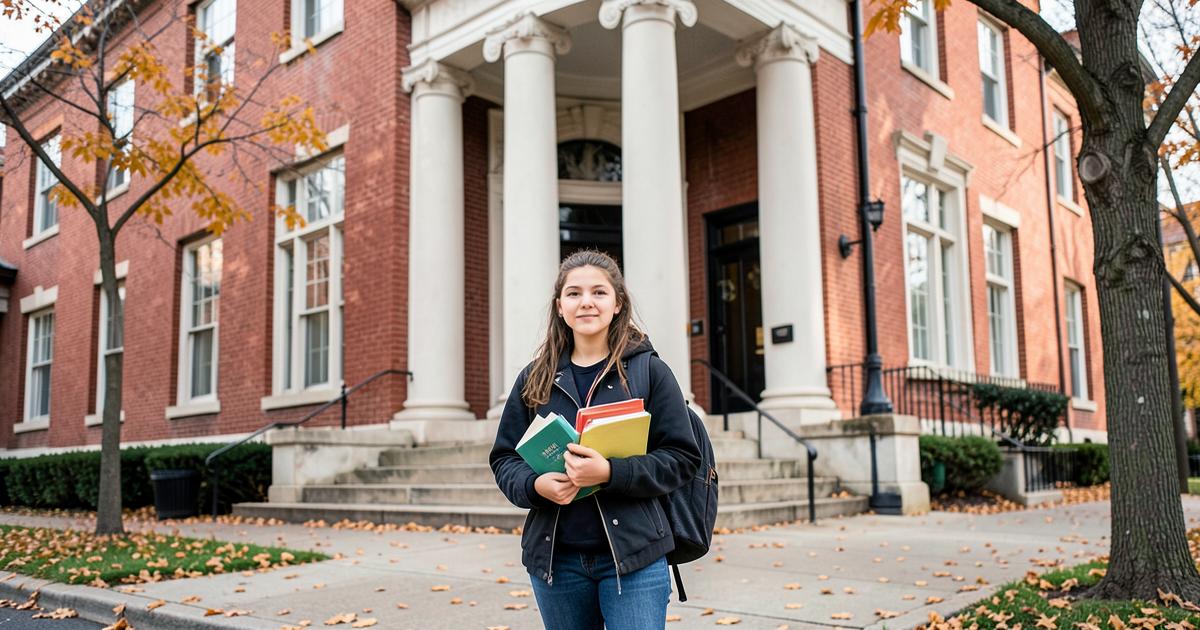
Studying in the USA as a South African
The United States has no central application system: you apply to each university separately, and the visa only becomes possible once a school accepts you and issues a Form I-20. Most South African students use the F-1 student visa; the M-1 covers vocational study and the J-1 covers exchange and scholarship programmes such as Fulbright.
Step-by-step
- Shortlist accredited universities and check each one's international admissions page. Application fees are usually USD 50–100 per university, so choose deliberately.
- Sit the required tests. Many undergraduate programmes are now test-optional, but some still ask for the SAT or ACT; postgraduate programmes may require the GRE or GMAT. English proficiency is usually shown with TOEFL iBT, IELTS Academic or Duolingo, though some universities waive it for English-medium South African schooling.
- Submit applications with your NSC results or degree transcript, essays, recommendation letters and financial documents. Deadlines for the September intake typically fall between November and February.
- Compare offers and funding. Ask specifically about international scholarships, assistantships and need-based aid — this differs enormously between institutions.
- Receive the Form I-20 after you accept an offer and prove you can pay the first year.
- Pay the SEVIS I-901 fee (currently USD 350 for F-1) and keep the receipt — you cannot attend the interview without it.
- Complete the DS-160 online visa application, pay the visa application fee (USD 185 for F-1 at the time of writing), and book a visa interview at the US Embassy in Pretoria or the Consulate in Johannesburg or Cape Town.
- Attend the interview. Bring the I-20, SEVIS receipt, DS-160 confirmation, passport, academic records, test scores and financial evidence. Expect direct questions about funding and your intention to return.
- Travel. F-1 students may enter the USA up to 30 days before the programme start date on the I-20.
Costs to budget
Approximate and highly variable by institution and state — always confirm on the university's own website.
- Tuition: roughly USD 10,000–30,000 a year at public universities for out-of-state/international students and USD 35,000–65,000+ at private universities. Community colleges are considerably cheaper and can transfer credits into a degree.
- Living costs: commonly USD 12,000–25,000 a year depending on the city.
- Health insurance: usually compulsory, often USD 1,500–3,500 a year.
- SEVIS I-901 fee: USD 350. DS-160 visa fee: USD 185.
- Tests: SAT/ACT, GRE/GMAT and TOEFL fees, each typically USD 100–275, plus score-report fees per university.
Hidden costs: application fees across multiple universities, courier and certification of transcripts, credential evaluation services (WES or similar, often USD 100–250), travel to the embassy for the interview, compulsory campus fees and meal plans, textbooks, and the rand/dollar exchange rate on every payment.
Working while studying
F-1 students may work on campus up to 20 hours a week during term. Off-campus work requires authorisation: CPT (Curricular Practical Training) during study, and OPT (Optional Practical Training) for up to 12 months after graduation, extended by a further 24 months for eligible STEM graduates. Working without authorisation ends your status.
Important cautions
- The F-1 visa is a non-immigrant visa: you must show that you intend to return home after study. Talking about staying permanently in the interview is a common refusal reason.
- Refusals under section 214(b) mean the officer was not satisfied about funding or ties to South Africa; you may reapply with better evidence.
- Visa fees and interview availability change, and appointment waiting times in South Africa can be long — book as soon as you have the I-20.
Sources
- US Department of State — Student visas (travel.state.gov)
- US Embassy & Consulates in South Africa (za.usembassy.gov)
- Study in the States, Department of Homeland Security (studyinthestates.dhs.gov)
- SEVP / SEVIS I-901 fee (fmjfee.com)
- EducationUSA — official advising network (educationusa.state.gov)
General information only, not immigration advice. US fees and visa rules change — verify on official US government websites before paying.