How to Get a South African Police Clearance Certificate (PCC)
If you're applying for a work visa, permanent residence, emigrating, adopting a child, registering as a security officer, or taking up certain jobs abroad, a Police Clearance Certificate is almost always on the document checklist. It's a simple concept — official confirmation of whether you have a criminal record in South Africa — but the application process has a few strict, non-negotiable steps. Here's exactly how it works.
What Is a Police Clearance Certificate?
A Police Clearance Certificate (PCC), sometimes called a criminal record check or "good conduct certificate," is an official document issued by the South African Police Service (SAPS) confirming whether an applicant has a criminal record in South Africa. It's issued by SAPS's Criminal Record and Crime Scene Management (CR&CSM) division, based in Pretoria, and the check is run against the national Criminal Record Centre database using the applicant's fingerprints.
Because it's a national document, it covers criminal records across the whole of South Africa — not just one province or police station.
Who Needs One
A PCC is most commonly required for:
- Temporary residence visas (general work, spousal, study, business, retirement) and permanent residence applications through Home Affairs
- Emigration and overseas employment
- Adoption processes
- Firearm licence applications
- Registration as a private security officer
- Pre-employment vetting by banks, schools, government departments, and many private employers
If you're applying for a South African visa or residence permit and have lived in another country for 12 months or more since turning 18, Home Affairs will also typically require a police clearance from that country in addition to your South African PCC.
Step-by-Step: How to Apply
Step 1: Get the Correct Application Form
The official form is SAPS 91(a) — the fingerprint enquiry form. This is the only form SAPS accepts for a criminal record check; there is no substitute.
Step 2: Have Your Fingerprints Taken In Person
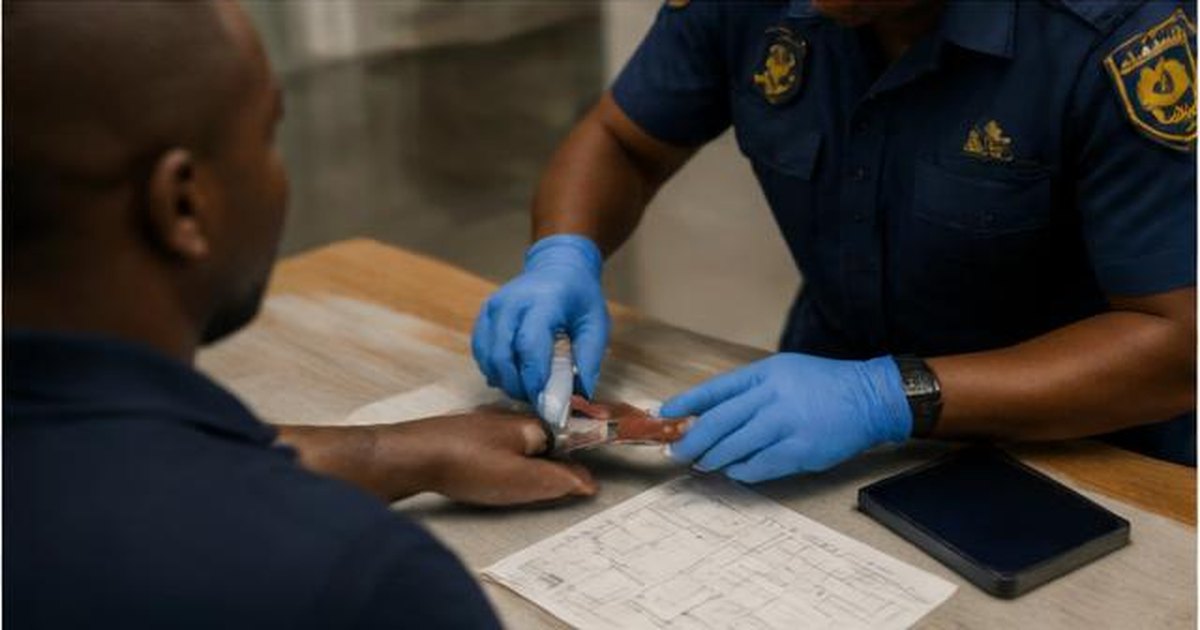
This is the one step that cannot be skipped or done remotely. If you're in South Africa, your fingerprints must be taken by SAPS at a police station — original prints only; scans, photocopies, or digital fingerprint captures from other sources are not accepted.
If you're living abroad, you can have your fingerprints taken at a police station in that country (using their official fingerprint forms) or at a South African embassy or consulate, using SAPS 91(a) where it's available.
Step 3: Gather Your Supporting Documents
You'll need:
- The completed SAPS 91(a) form with your fingerprints
- A certified copy of your South African ID document or passport
- Proof of payment for the application fee
- If you need a maiden name or any other former surname reflected on the certificate, documentary proof — such as a certified copy of your marriage certificate — must be attached
You'll also need to present your original ID or passport at the police station when your fingerprints are taken, as proof of identity.
Step 4: Pay the Fee
The prescribed SAPS fee is R190 per application, and it's non-refundable. It can be paid in cash at the police station where you lodge the application, or by electronic transfer directly into SAPS's account (held in favour of the National Commissioner of the South African Police Service). Keep your proof of payment — it must be submitted with your application.
Step 5: Submit Your Application to Pretoria
The completed application — fingerprint form, certified ID/passport copy, and proof of payment — must reach the SAPS Criminal Record Centre in Pretoria. This can be done in person, by post, or by courier. Applications submitted from abroad are sent directly to the Criminal Record Centre and are not returned to the applicant afterward, so keep copies of everything you send.
Step 6: Wait for Processing
SAPS's published target is around 15 working days to finalise an application once it reaches the Criminal Record Centre with all required documents, excluding postal time. In practice, real-world waits are frequently longer — commonly 6 to 8 weeks, and SAPS itself has acknowledged periods of significant backlog at the Criminal Record Centre that can extend this considerably. If you're working to a visa or employment deadline, apply as early as possible and build in a buffer well beyond the official 15-working-day target.
Step 7: Track, Collect, and Legalise If Needed
SAPS provides an online status-check tool on its website, using the enquiry number issued when your application was lodged — this only checks status; it cannot be used to submit a new application or fingerprints. Once finalised, the certificate is sent by post, courier, or is available for collection, depending on how you applied. SAPS does not email certificates.
If your certificate is not collected within three months of being finalised, it is destroyed, and you would need to reapply.
If the certificate is for use outside South Africa, most foreign authorities will require it to be apostilled or legalised. This is handled separately through the Department of International Relations and Cooperation (DIRCO), not SAPS, so factor in additional time and steps if this applies to you.
How Long Is It Valid?
A PCC is generally treated as valid for six months from its date of issue, though this isn't a fixed legal expiry — it's a convention most receiving institutions apply. Some embassies or employers may require a certificate issued within the last three months, while others accept one up to six months old. Always confirm the specific requirement of the organisation requesting your PCC before applying, since submitting a certificate that's "too old" for their purposes means starting the whole process again — new fingerprints, new fee, new processing period.
FAQ
How much does a South African Police Clearance Certificate cost? R190 per application, payable directly to SAPS. This is the official, prescribed fee — non-refundable, and separate from any fees charged by third-party agents or courier services if you choose to use them.
Can I apply for a PCC entirely online? No. SAPS offers an online tool to check the status of an application you've already submitted, but there is no way to submit a new application or complete the fingerprinting step online. Fingerprints must be taken in person, either at a South African police station or, for applicants abroad, at a foreign police station or South African embassy.
How long does it take to get a police clearance certificate? SAPS's official target is about 15 working days after a complete application reaches the Criminal Record Centre in Pretoria, not counting postal time. In practice, 6 to 8 weeks is common, and backlogs at the Criminal Record Centre have at times pushed this well beyond that. Apply as early as you can if you're working to a deadline.
Can I apply from outside South Africa? Yes. You can have your fingerprints taken at a local police station in your country of residence (using that country's official fingerprint forms, or SAPS 91(a) where available) or at a South African embassy or consulate. The completed documents are then sent directly to the SAPS Criminal Record Centre in Pretoria.
What form do I need? SAPS 91(a), the official fingerprint enquiry form. It's the only form SAPS accepts for a criminal record check.
How long is a police clearance certificate valid for? There's no fixed legal expiry, but it's generally treated as valid for six months from issue. Some institutions require a more recent certificate — always check the specific requirement of whoever is requesting it before you apply.
What happens if I don't collect my certificate? If it isn't collected within three months of being finalised, SAPS destroys it, and you would need to submit a fresh application, including new fingerprints and a new fee.
Can I get my certificate to reflect a maiden name or previous surname? Yes, but you need to specifically request it and attach documentary proof — typically a certified copy of your marriage certificate — with your application.
Do I need a police clearance certificate for a South African visa, or just for going abroad? Both, depending on your situation. South Africans emigrating or working abroad typically need a SAPS PCC for the destination country's requirements. Foreign nationals applying for South African temporary or permanent residence generally need a police clearance from every country they've lived in for 12 months or more since age 18 — which, for South African residents, includes a SAPS PCC.
Do I need to get my certificate apostilled? Only if it's for use in another country and that country requires it. Apostille or legalisation is done separately through DIRCO, not through SAPS, so it's an extra step (and extra time) on top of the standard SAPS process.
Can someone else apply on my behalf? The fingerprinting step must be done by the applicant in person — this cannot be delegated. However, submitting the completed application pack to the Criminal Record Centre (by post or courier) or collecting the finished certificate can sometimes be handled by a third party, depending on the specific SAPS office's requirements.
Sources
- South African Police Service (SAPS), "Services: Applying for a Police Clearance Certificate" — saps.gov.za
- South African Police Service, Criminal Record and Crime Scene Management (CR&CSM), Pretoria
- Department of International Relations and Cooperation (DIRCO), apostille and legalisation guidance
This article is for general informational purposes and does not constitute legal advice. Requirements, fees, and processing times are set by SAPS and can change — confirm current details directly with SAPS or at saps.gov.za before applying.