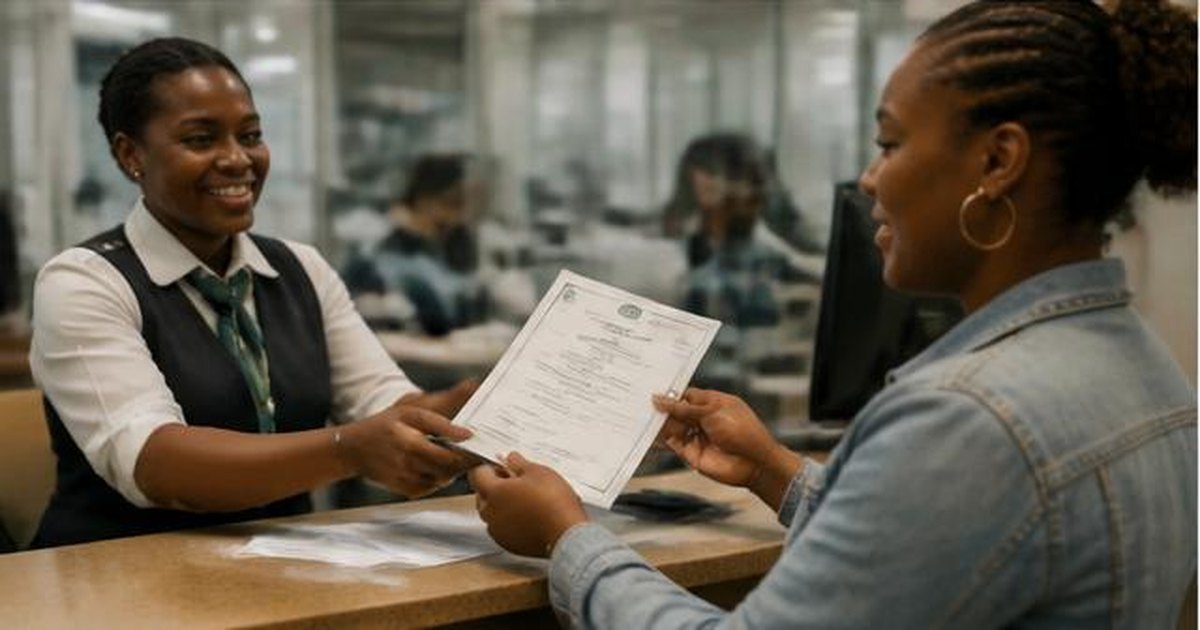
How to Get an Unabridged Birth Certificate in South Africa
If you've ever applied for a passport, tried to travel abroad with a minor, or dealt with certain visa or emigration processes, you've probably been asked for an "unabridged" birth certificate — not the basic one you may already have. It's a specific, more detailed document, and getting one means going back to the Department of Home Affairs (DHA) with a separate application. Here's exactly how it works.
What Is an Unabridged Birth Certificate?
An unabridged birth certificate is the DHA's full birth record. It records the child's full name, surname, date of birth, place of birth, and 13-digit identity number, along with the complete details of both parents — their full names, ID numbers, dates of birth, and citizenship status — plus the date of registration and the registering Home Affairs office, all under an official DHA stamp.
This is different from an abridged birth certificate, the shorter document most South Africans are issued as children. An abridged certificate contains only basic information — name, date of birth, and place of birth — without the detailed parental information. For most everyday purposes (school enrolment, opening a bank account, general ID processes) the abridged version is sufficient. The unabridged version exists specifically for situations where authorities need to verify parentage, most commonly international travel.
When You Need One
The unabridged certificate matters most for:
- Passport applications — DHA requires it as supporting documentation
- International travel with a minor — South African immigration law requires proof of parental relationship (and, in many cases, consent from both parents) when a child travels internationally, and the unabridged certificate is the standard proof used
- Emigration or foreign visa applications — many countries require it as part of long-stay visa, residency, or citizenship applications
- Proving parentage or citizenship in legal, adoption, or inheritance matters
If you only have an abridged certificate and one of these situations applies to you, you'll need to apply separately for the unabridged version — it isn't automatically issued alongside the abridged one for most people already on the population register.
How to Apply
Step 1: Confirm You're on the National Population Register
If your birth was properly registered and you already hold an abridged birth certificate or ID, you're on the register and can apply directly for the unabridged version. If you were never registered at all, you'll need to complete late registration of birth first — a separate process — before an unabridged certificate can be issued.
Step 2: Complete the Correct Form
The relevant form is DHA-154 (also referenced as BI-154 in some older guidance), the application form specifically for an unabridged birth certificate. This is different from BI-24, which is used for the original registration of a birth. Submitting the wrong form is one of the most common reasons applications get bounced back at the counter, so confirm you're using DHA-154 before your appointment.
Details on the form must match your birth registration exactly — not any name you may go by informally within your family. If you've legally changed your name through Home Affairs since birth, you'll need to bring a copy of the approval letter or your amended certificate as well.
Step 3: Gather Supporting Documents
Typical requirements include:
- Your ID document (or, for a minor, the requesting parent's ID)
- A copy of your existing abridged birth certificate, if you have one — this helps Home Affairs trace the original record
- Certified copies of both parents' ID documents
- A marriage certificate, if applicable
- Proof of payment for the applicable fee
Step 4: Submit at a Home Affairs Office (or Embassy, If Abroad)
Applications are lodged at any DHA office inside South Africa. If you're outside the country, you can apply at your nearest South African embassy, high commission, or consulate — the process is broadly similar, though document certification and fee payment methods differ by mission, and fees at foreign missions are typically charged in local currency rather than rand.
Step 5: Wait for Processing
Because the DHA doesn't hold all historical birth information digitally, many applications require staff to retrieve the original paper record — sometimes called the "vault copy" — from archives before the certificate can be issued. This is the main reason unabridged certificate applications typically take longer than a straightforward reprint of an abridged one. Standard processing is generally quoted at 6–8 weeks, though it can run longer if your original record needs extensive tracing, or if you're applying via an embassy abroad.
Step 6: Track and Collect
You can track your application by:
- Logging into the eHome Affairs portal with your 13-digit ID number and checking status under "My Applications"
- SMSing "ID" followed by your ID number to 32551 (a nominal SMS fee applies)
- Calling the DHA Contact Centre on 0800 60 11 90 with your receipt number
You'll be notified by SMS once the certificate is ready, and you collect it in person at the same office where you applied, bringing your ID and receipt.
Step 7: Apostille or Legalise, If Needed for Overseas Use
If the certificate is for use in another country, most foreign authorities will require it to be apostilled or legalised first. This is a separate process handled through the Department of International Relations and Cooperation (DIRCO), not through Home Affairs itself, so budget extra time if this applies to you.
Fees
Fee guidance for unabridged certificates has varied across sources, and the DHA has periodically adjusted its fee structure. Historically, a standard fee of around R75 has been charged for reissuing or newly applying for an unabridged certificate, while some more recent guidance indicates the DHA does not charge a fee for replacement unabridged certificates issued inside South Africa in certain circumstances. Because fees can change and can also differ for applications made at foreign missions, always confirm the current fee directly with your local Home Affairs office or the DHA Contact Centre (0800 60 11 90) before applying.
FAQ
What's the difference between an abridged and an unabridged birth certificate? An abridged certificate contains only basic details — the child's name, date of birth, and place of birth. An unabridged certificate contains complete information, including both parents' full names, ID numbers, dates of birth, and citizenship status.
Do I need an unabridged birth certificate to apply for a passport? Yes. Home Affairs requires an unabridged birth certificate as supporting documentation for South African passport applications.
Do I need it for a child travelling internationally? In most cases, yes. South African immigration requirements for minors travelling internationally generally call for an unabridged birth certificate as proof of the parent-child relationship, often alongside consent documentation from both parents (or a court order, where applicable).
Which form do I use to apply? Form DHA-154 (sometimes referenced as BI-154). This is different from BI-24, which is used for the original birth registration.
How long does it take to get an unabridged birth certificate? Typically 6–8 weeks, though this can be longer if Home Affairs needs to retrieve your original paper record from archives, or if you're applying through a South African embassy abroad.
How much does it cost? Fees have varied and been updated over time — commonly cited around R75 for a standard application, though some current guidance suggests certain replacement applications inside South Africa may not attract a fee. Confirm the exact current fee with your local Home Affairs office or the DHA Contact Centre before applying, since it can also differ for embassy applications abroad.
Can I apply for an unabridged certificate if I was never registered at birth? Not directly — you'll first need to complete late registration of birth, which formally enters you into the National Population Register. Once that's done, you can apply for the unabridged certificate.
Can I apply from outside South Africa? Yes. Apply at your nearest South African embassy, high commission, or consulate. Requirements are broadly similar to applying domestically, but document certification, currency, and processing timelines can differ by mission.
How do I track my application? Through the eHome Affairs portal (using your 13-digit ID number), by SMSing "ID" plus your ID number to 32551, or by calling the DHA Contact Centre on 0800 60 11 90 with your receipt number.
Do I need to do anything extra if the certificate is for use overseas? Yes — most foreign authorities require the certificate to be apostilled or legalised, which is handled separately through DIRCO, not Home Affairs. Factor in additional processing time for this step.
What if my certificate is lost in the post or delayed? If it hasn't arrived within roughly eight weeks, contact the Home Affairs office where you applied to trace it manually. Where a certificate is confirmed lost in the post, it can generally be reissued at no additional cost once this is documented.
Sources
- Births and Deaths Registration Act 51 of 1992
- Department of Home Affairs, Contact Centre — 0800 60 11 90
- South African Government, "Register birth" — gov.za
- Department of International Relations and Cooperation (DIRCO), embassy and consulate guidance on unabridged birth certificate applications
- South African embassy application guidance (Seoul, Stockholm, Ottawa missions)
This article is for general informational purposes and does not constitute legal advice. Requirements, forms, and fees are set and updated by the Department of Home Affairs — confirm current details at your nearest Home Affairs office, a South African embassy or consulate if applying from abroad, or by calling the DHA Contact Centre before applying.