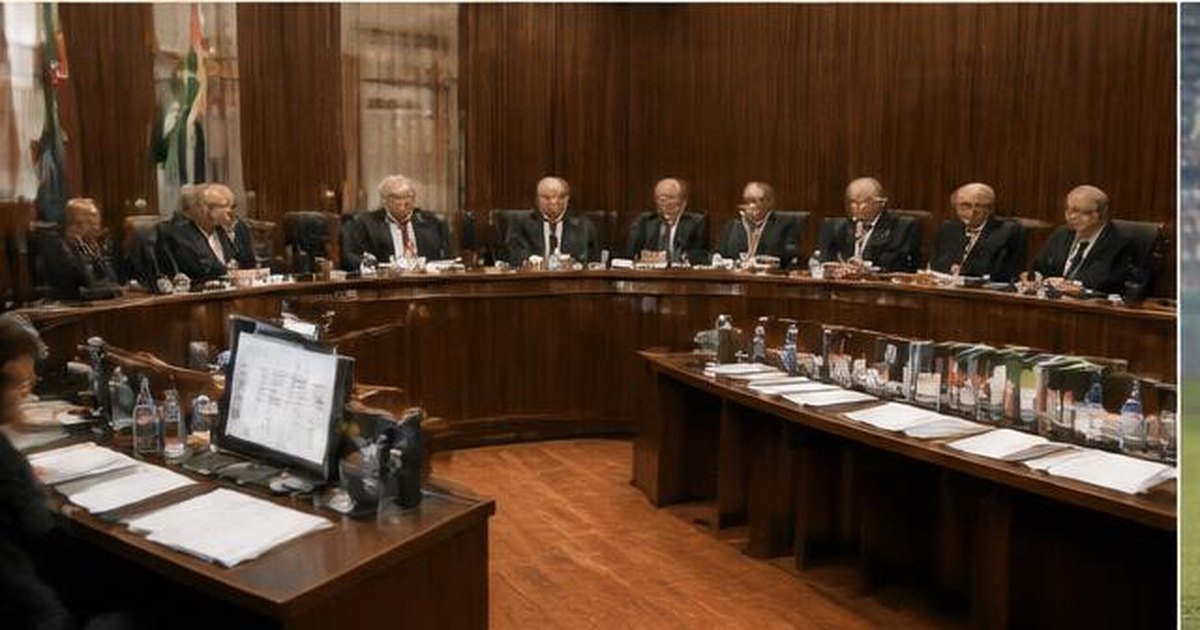
The Zondo Commission vs the Madlanga Commission: What's the Difference?
South Africa has held two major judicial commissions of inquiry in recent years: the Zondo Commission (2018–2022) into state capture, and the Madlanga Commission (2025– ) into criminal infiltration of the justice system. They sound similar — both are chaired by senior judges, both were set up by the President, and both investigate corruption. But they look at very different problems, and they were created in different circumstances.
This page explains, in plain English, what each commission is, what it investigated, what powers it has, and what happened to the Zondo Commission's findings.
Quick facts
- Zondo Commission: 2018–2022, chaired by Justice Raymond Zondo, investigated state capture and corruption at state-owned companies.
- Madlanga Commission: Established July 2025, chaired by Justice Mbuyiseli Madlanga, investigates alleged criminal infiltration of SAPS, the NPA and the justice system.
- Neither can prosecute: Both commissions gather evidence and make recommendations; only the NPA can prosecute and only courts can convict.
- Cost: Zondo cost roughly R1 billion; Madlanga's budget is in the hundreds of millions of rand and ongoing.
- Status: Zondo report completed in June 2022; Madlanga hearings began in September 2025 and are ongoing.
Timeline
2016 — State of Capture report
Then-Public Protector Thuli Madonsela releases the State of Capture report, which directs that a judicial commission of inquiry be established. The report centres on the Gupta family's relationship with President Jacob Zuma and alleged influence over cabinet appointments and state contracts.
2018 — Zondo Commission established
President Jacob Zuma appoints Deputy Chief Justice Raymond Zondo to chair the Judicial Commission of Inquiry into Allegations of State Capture, Corruption and Fraud in the Public Sector. The appointment follows court proceedings that confirm the Public Protector's remedial action.
2018–2021 — Zondo hearings
Public hearings run from August 2018 to mid-2021. More than 300 witnesses testify, including former ministers, senior officials, executives of state-owned companies and whistle-blowers. Evidence covers Eskom, Transnet, Denel, SAA, SARS and Bosasa, among others.
2022 — Zondo final report
The commission hands its final report to President Cyril Ramaphosa in five parts between January and June 2022. The report makes findings against dozens of individuals and recommends investigations and reforms.
July 2025 — Mkhwanazi allegations
KwaZulu-Natal Provincial Police Commissioner Lieutenant-General Nhlanhla Mkhwanazi holds a press conference alleging that senior figures in the police and justice system are colluding with criminal syndicates, that a specialised political killings task team was improperly disbanded, and that Police Minister Senzo Mchunu and Deputy National Commissioner Lieutenant-General Shadrack Sibiya are among those allegedly linked to interference.
July 2025 — Madlanga Commission established
President Ramaphosa places Minister Mchunu on special leave, appoints Professor Firoz Cachalia as Acting Minister of Police, and establishes the Judicial Commission of Inquiry into Criminality, Political Interference and Corruption in the Criminal Justice System, chaired by retired Justice Mbuyiseli Madlanga.
September 2025 — Madlanga hearings begin
The commission begins public hearings in Pretoria. General Mkhwanazi appears as the first witness. The commission's work is ongoing and no final report has been released.
What is a judicial commission of inquiry?
A commission of inquiry is a formal investigation appointed by the President under section 84(2)(f) of the Constitution. When a judge chairs it, it is usually called a judicial commission. A commission can subpoena witnesses, take evidence under oath, and search for documents — but it cannot prosecute or convict anyone. Its job is to find facts and make recommendations. Only the National Prosecuting Authority (NPA) can charge people, and only courts can convict them.
This is the single most important thing to understand about both commissions: a commission's report is not a guilty verdict.
The Zondo Commission at a glance
- Full name: Judicial Commission of Inquiry into Allegations of State Capture, Corruption and Fraud in the Public Sector including Organs of State.
- Chair: Justice Raymond Zondo, then Deputy Chief Justice (later Chief Justice).
- Established: January 2018 by President Jacob Zuma, after the Public Protector's 2016 State of Capture report (by then-Public Protector Thuli Madonsela) directed that a commission be set up, and the courts confirmed this.
- What it investigated: "State capture" — the alleged systematic takeover of state institutions and state-owned companies (such as Eskom, Transnet, Denel, SAA and SARS) by private interests, centred on the Gupta family's relationship with President Zuma, as well as corruption involving companies such as Bosasa.
- Duration and cost: Hearings ran from August 2018 to mid-2021, with more than 300 witnesses. The commission cost roughly R1 billion, making it the most expensive inquiry in South African history.
- Outcome: The final report was handed to President Cyril Ramaphosa in five parts between January and June 2022. It made findings against dozens of individuals — including findings that implicated former President Zuma — and recommended that many people be investigated for possible prosecution.
What happened after the Zondo report?
Implementation has been slow and is a subject of ongoing public debate. In October 2022 the President tabled an implementation plan in Parliament. Some recommendations were acted on (for example, new procurement legislation and reforms at state-owned companies), and some individuals named in the report were later charged or faced disciplinary processes — but by 2026 many of the report's prosecution recommendations had still not resulted in completed trials. Civil-society organisations and opposition parties have repeatedly criticised the pace of follow-through. Jacob Zuma himself was jailed in 2021 for contempt of the Constitutional Court after refusing to testify before the commission — a separate matter from the commission's findings.
The Madlanga Commission at a glance
- Full name: Judicial Commission of Inquiry into Criminality, Political Interference and Corruption in the Criminal Justice System.
- Chair: Justice Mbuyiseli Madlanga, a retired Justice of the Constitutional Court.
- Established: July 2025 by President Cyril Ramaphosa.
- Why it was set up: On 6 July 2025, KwaZulu-Natal Provincial Police Commissioner Lieutenant-General Nhlanhla Mkhwanazi held a press conference and made extraordinary public allegations: that senior figures in the police and justice system were colluding with criminal syndicates, that a specialised political killings task team had been improperly disbanded, and that Police Minister Senzo Mchunu and Deputy National Commissioner Lieutenant-General Shadrack Sibiya were among those allegedly linked to interference. The President responded by placing Minister Mchunu on special leave, appointing Professor Firoz Cachalia as Acting Minister of Police, and establishing the Madlanga Commission.
- What it is investigating: Alleged criminality, political interference and corruption within the South African Police Service (SAPS), the NPA, the State Security Agency, and other parts of the criminal justice system — including alleged links between senior officials and organised-crime networks, and the alleged capture of parts of the justice system itself.
- Status: Public hearings began in September 2025 in Pretoria, with General Mkhwanazi as the first witness. The commission's work is ongoing; it has not yet produced a final report.
Zondo vs Madlanga: the key differences
| Zondo Commission | Madlanga Commission | |
|---|---|---|
| Core question | Did private interests (e.g. the Gupta network) capture the state and loot state-owned companies? | Have criminal networks infiltrated the police and justice system, with political protection? |
| Main focus | State capture at national departments and SOEs (Eskom, Transnet, SARS, etc.) | SAPS, NPA, intelligence services, and the criminal justice system itself |
| Chair | Justice Raymond Zondo (sitting Deputy Chief Justice) | Justice Mbuyiseli Madlanga (retired Constitutional Court Justice) |
| Appointed by | President Jacob Zuma (under court-backed Public Protector remedial action) | President Cyril Ramaphosa (after General Mkhwanazi's public allegations) |
| Years | 2018 – 2022 (final report June 2022) | Established July 2025; hearings ongoing |
| Approx. cost | About R1 billion | Ongoing — budgeted in the hundreds of millions of rand |
| Status | Completed; implementation of recommendations disputed and incomplete | In progress; no final findings yet |
What they have in common
- Both are fact-finding, not courts. Neither commission can send anyone to jail. Both hand findings to the President and, where crimes are implicated, refer matters to the NPA.
- Both concern "capture." Zondo examined capture of the state by business interests; Madlanga examines alleged capture of the justice system by criminal interests. Some commentators describe the Madlanga allegations as a second, darker phase of the problem Zondo exposed.
- Both test accountability. Public confidence in each commission ultimately depends on what happens after — whether prosecutors act on the evidence and whether implicated officials face consequences.
- Evidence is under oath. Witnesses before both commissions testify under oath and can be cross-examined; lying to a commission is a criminal offence.
How to follow the Madlanga Commission
- Hearings are open to the public and are broadcast and live-streamed by major South African news outlets and the SABC.
- Official statements and hearing schedules are published through The Presidency and the Government Communication and Information System (GCIS).
- The Zondo Commission's full report remains publicly available on the official state capture commission archive hosted via gov.za.
Frequently asked questions
Is the Madlanga Commission the same as the Zondo Commission? No. They are separate inquiries, years apart, with different chairs, different terms of reference and different subjects. Zondo looked at state capture and corruption in government and state companies; Madlanga is looking at alleged criminal infiltration of the police and justice system.
Can a commission of inquiry arrest or prosecute anyone? No. A commission gathers evidence and makes findings and recommendations. Only the NPA can prosecute, and only a court can convict and sentence.
Did the Zondo Commission's findings lead to prosecutions? Some matters referred by the commission led to arrests and court cases, and certain implicated individuals were later charged in separate proceedings, but by 2026 many recommendations remained unimplemented or still under investigation — a source of continuing criticism.
Who is General Nhlanhla Mkhwanazi? The KwaZulu-Natal Provincial Commissioner of the SAPS. His public allegations on 6 July 2025 about criminal infiltration and political interference in the police triggered the establishment of the Madlanga Commission, and he was its first witness.
What happened to Police Minister Senzo Mchunu? After the allegations, President Ramaphosa placed Minister Mchunu on special leave in July 2025 pending the commission's work, and appointed Professor Firoz Cachalia as Acting Minister of Police. The allegations against Minister Mchunu remain allegations — the commission has not made final findings.
References
- The Presidency — establishment of the Judicial Commission of Inquiry into Criminality, Political Interference and Corruption in the Criminal Justice System (July 2025): thepresidency.gov.za
- Judicial Commission of Inquiry into Allegations of State Capture — final report and archive: statecapture.org.za / gov.za
- Public Protector South Africa — State of Capture report (2016): pprotect.org
- South African Police Service: saps.gov.za
- Constitution of the Republic of South Africa, 1996 — section 84(2)(f): gov.za
This is an independent plain-English explainer, not legal or political advice. The Madlanga Commission is ongoing and allegations remain unproven until the commission reports and courts decide. Facts were correct at the date shown above; check The Presidency and GCIS for the latest developments.