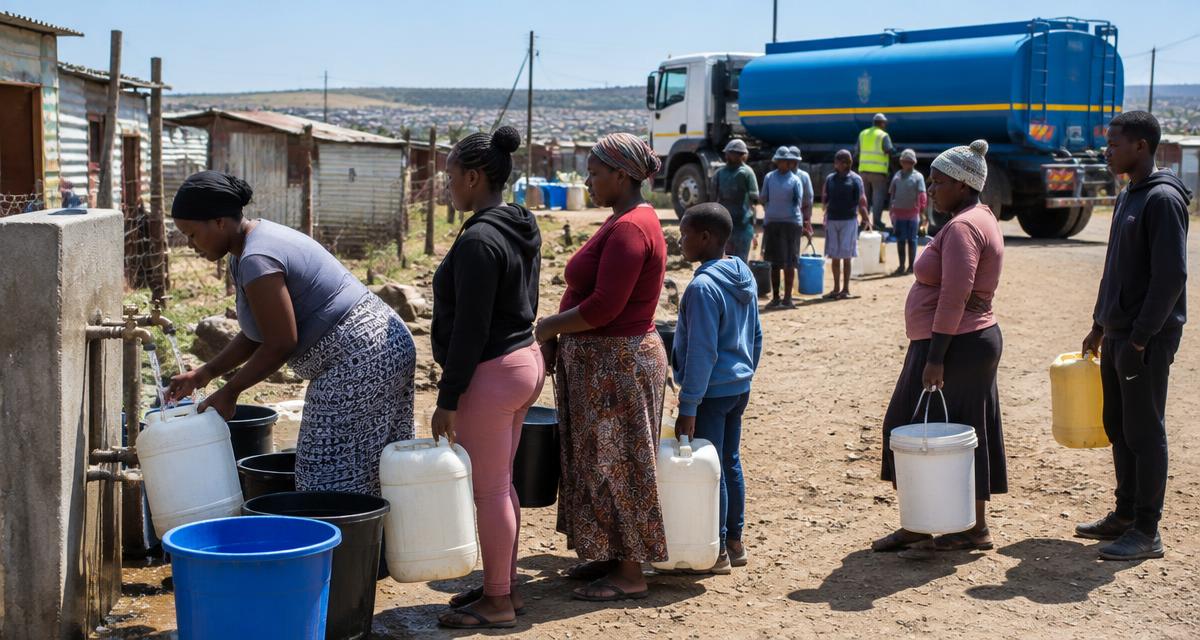
South Africa's Water Crisis: Why Taps Run Dry and What You Can Do
South Africa is a water-scarce country, but the dry taps in Johannesburg, Durban, Polokwane and many smaller towns are not mainly about drought. They are mostly about infrastructure: leaking pipes, failing treatment plants, unpaid bills and municipalities that have not maintained or invested in their systems for years.
The scale of the problem
The Department of Water and Sanitation's own assessments paint a stark picture:
- Non-revenue water — water that is pumped but never paid for, mostly through leaks and illegal connections — is around 47% nationally. Nearly half of treated water is lost before it earns a rand.
- The No Drop report, which measures municipal water losses, shows losses have worsened over the past decade, with many municipalities losing more than half their water.
- The Blue Drop report, which measures drinking-water quality, found that a significant share of municipal water systems are in a poor or critical state, and dozens of systems failed to meet safety standards.
- The Green Drop report on wastewater treatment found that most municipal wastewater works are in a critical condition, polluting rivers and dams — which then makes water more expensive to treat.
Why this happened
The causes are structural, not natural:
- Maintenance was deferred for years. Pipes, pumps and reservoirs have finite lifespans. Many municipalities spent their budgets elsewhere and are now facing simultaneous failures.
- Skills and management gaps. Water and wastewater plants need qualified process controllers and engineers. Many municipalities cannot attract or retain them.
- A broken revenue cycle. Residents and businesses in areas with unreliable supply stop paying; municipalities then have less money for repairs; supply gets worse. Breaking this cycle is the central challenge.
- Rapid urban growth. Cities have added millions of residents without matching investment in bulk water and distribution capacity.
What is being done
National government has reinstated the Blue Drop, Green Drop and No Drop monitoring programmes after years without them, and has created a National Water Crisis Committee-style response in the worst-hit metros. The Water Services Amendment Bill and reforms to allow more private and regional utility participation are working through the system. Some metros have begun ring-fencing water revenue and partnering with the private sector on leaks and reuse.
Progress is real but slow, and the gap between the best and worst municipalities is widening.
What you can do as a resident
- Report leaks and burst pipes to your municipality and get a reference number. A single leaking mains pipe can waste millions of litres; reported leaks with reference numbers also build the public record that forces action.
- Escalate systematically. If water outages continue, follow the escalation path: municipal ticket → ward councillor → municipal manager in writing → provincial cooperative governance department → the South African Human Rights Commission, which treats access to water as a constitutional right.
- Check your municipality's reports. Blue Drop, Green Drop and No Drop results for your municipality are public. Knowing how your system scores gives you facts for ward meetings and complaints.
- Use water wisely anyway. Even where the crisis is infrastructural, demand pressure matters during peak summer months and drought cycles.
- Be cautious with boreholes and tanks. Private borehole water should be tested before drinking, and rainwater tanks need basic hygiene maintenance.
The bottom line
South Africa has enough water, on average, for its people and economy — but only if it is captured, treated, pumped and billed properly. The crisis is one of governance and maintenance more than of rainfall. That is bad news because infrastructure takes years to fix, but good news because it is fixable, and because citizens who report, escalate and hold municipalities to the published performance reports are part of how it gets fixed.