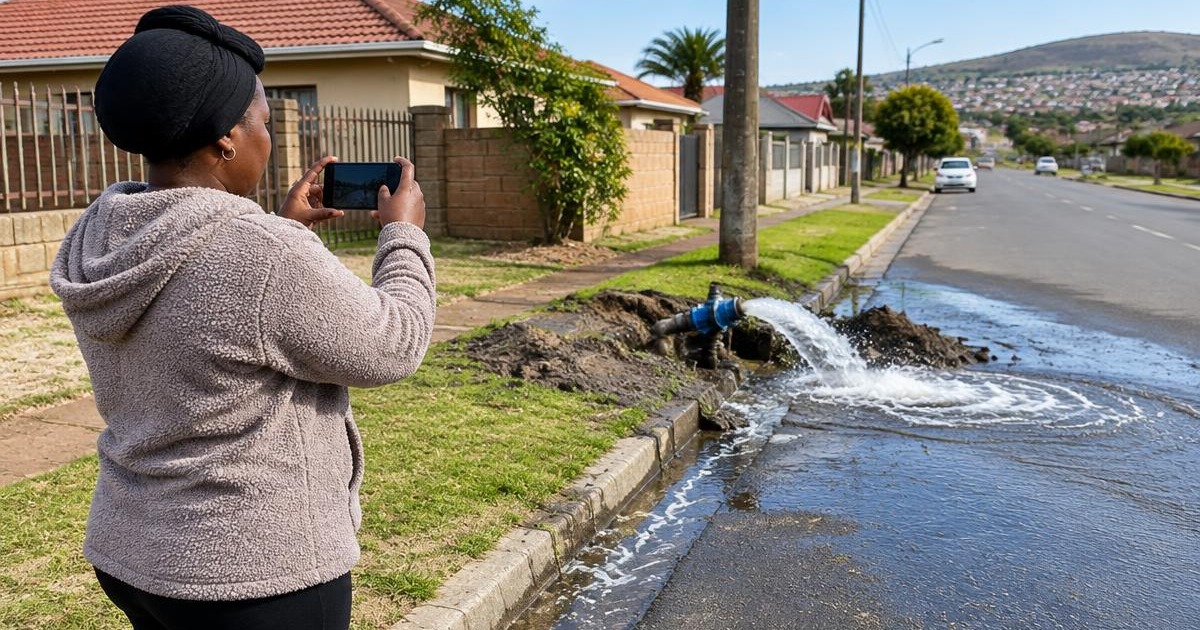
Quick answer: Report a municipal fault through your municipality's official call centre, app, website, email or customer office. Always get a reference number, keep dated evidence and follow up using the same number. Escalate an unresolved complaint to a supervisor, ward councillor and then the appropriate oversight body.
A burst pipe, sewage overflow, dangerous electrical fault, missed refuse collection, pothole or incorrect municipal bill can become harder to solve when there is no paper trail. This guide shows how to create one and how to escalate without starting from scratch every time.
First: confirm who supplies the service
Your municipality usually handles local water, sanitation, refuse, roads and billing. Electricity may come from the municipality or directly from Eskom. Check the supplier named on your bill before reporting an outage or meter problem.
For an immediate danger — exposed live wires, a transformer fire, a collapsed manhole, severe flooding or sewage threatening drinking water — keep people away and call the responsible emergency service. Use 112 from a mobile phone for a life-threatening emergency. Do not touch electrical equipment or enter floodwater.
What to collect before reporting
- Exact street address, nearest intersection, suburb and a map pin if possible
- Account or meter number for a billing, water or electricity query
- Clear photographs or video showing the fault and surrounding location
- The date it started and how many properties are affected
- Previous reference numbers and follow-up dates
- For billing: current meter photo, recent statements and proof of payments
Do not publish another person's ID number, account number or home details on social media.
Step-by-step reporting process
1. Log the problem with the municipality
Use the official website, app, call centre, email or customer office listed on the municipality's website or your account. Describe one issue clearly and request a ticket or reference number.
2. Record the promise
Write down the reference number, date, time, channel, agent's name and quoted turnaround time. Save SMS or email confirmations. This record proves when the municipality was notified.
3. Follow up on the same ticket
If the deadline passes, quote the original reference and ask for escalation to the responsible department or supervisor. Avoid repeatedly opening duplicate tickets unless the municipality instructs you to do so.
4. Contact your ward councillor
Send a short written summary with the reference number, dates, location and evidence. The councillor does not repair the fault but can question officials, track recurring failures and raise the issue through council structures.
5. Escalate systemic failure
For repeated or widespread failure, write to the Municipal Manager's office and the municipality's complaints or ombuds service if it has one. Provincial Cooperative Governance can receive unresolved concerns about municipal performance. For suspected maladministration after internal channels fail, lodge a free complaint with the Public Protector.
Which outside body handles which problem?
- Eskom: if Eskom supplies your property, report to Eskom first; unresolved licensed-electricity complaints may go to NERSA
- Water pollution or a major sewage spill: report locally and alert the Department of Water and Sanitation when a river, dam or drinking-water source is threatened
- Basic-services rights: the South African Human Rights Commission may consider serious, persistent denial of water or sanitation affecting a community
- Maladministration or abuse of power: the Public Protector, after reasonable internal attempts
- Records being withheld: a PAIA request to the municipality's Information Officer, followed where necessary by the Information Regulator
How to dispute an incorrect municipal bill
Submit a written dispute under the municipality's credit-control policy and by-laws. State the amount disputed, why it is wrong, meter readings, account number and the outcome you want. Ask for written confirmation and a dispute reference.
Continue paying the undisputed portion and current charges where possible. Do not simply stop paying the whole account: disconnection and collection rules differ, and protection may depend on following the formal dispute process. If disconnection is threatened despite a properly lodged dispute, seek legal advice promptly.
Using PAIA to obtain records
PAIA can help when you need meter history, internal reports, repair records, contracts or reasons that are not voluntarily provided. Find the municipality's PAIA manual and Information Officer, complete the prescribed request form and identify the record precisely. The ordinary response period is 30 days, subject to the Act's rules and any valid extension.
If a request is refused or ignored, use the available internal appeal and then complain to the Information Regulator or approach a court. Our plain-English PAIA guide explains the process.
Complaint log you can copy
Keep these columns in a notebook or spreadsheet:
| Date | Problem and location | Channel | Reference number | Person contacted | Promised date | Result |
|---|---|---|---|---|---|---|
| 22 Sep | Burst pipe, Example St | Call centre | REF123 | Agent name | 24 Sep | Pending |
Sources and further reading
- Municipal Systems Act 32 of 2000
- Public Protector: frequently asked questions
- NERSA electricity customer complaints
- Eskom customer service contacts
- Information Regulator: PAIA guidance
- South African Human Rights Commission
Important: Contact details and dispute rules differ by municipality. Confirm the current process on your municipality's official website. This guide is general information, not legal advice.