How to Apply for the SASSA Child Support Grant
The Child Support Grant is South Africa's largest social assistance programme, reaching well over 13 million children every month. It's paid by the South African Social Security Agency (SASSA) to help cover a child's basic needs, and it's available to any qualifying caregiver — not just biological parents. Here's exactly who qualifies, what you need, and how to apply.
What Is the Child Support Grant?
The Child Support Grant is a monthly cash payment made under the Social Assistance Act 13 of 2004, administered by SASSA on behalf of the Department of Social Development. It's paid to the primary caregiver of a child, not directly to the child, on the basis that the caregiver is best placed to use the money for the child's food, clothing, education, and general welfare.
The current benefit is R580 per child per month, effective from April 2026, with a top-up of R290 available for qualifying beneficiaries. Grant values are reviewed and typically adjusted each year, generally around April, so it's worth confirming the current figure with SASSA or on sassa.gov.za before applying, since it can change between the time this is written and when you apply.
Who Qualifies
To apply as the primary caregiver, you generally need to meet all of the following:
- You and the child both live in South Africa.
- You're a South African citizen, permanent resident, or recognised refugee.
- You're the primary caregiver — the person primarily responsible for the child's day-to-day care. This doesn't need to be a biological parent; grandparents, aunts, uncles, older siblings, or any other adult with primary responsibility for the child can apply.
- The child is under 18 years old.
- The child is not cared for in a state institution (such as a facility already receiving state funding for the child's care).
- You pass the means test (see below).
If you're not the child's biological parent or legal guardian, you can still apply, but you'll typically need to show a written note of permission from the parent or guardian, or provide evidence of your efforts to secure maintenance from the parents, or an affidavit explaining the child's circumstances.
You can apply for a maximum of six children who are not your biological children or legally adopted children — this cap doesn't apply to your own biological or legally adopted children.
The Means Test
The Child Support Grant is subject to an income-based means test — unlike the Foster Child Grant, which has none. SASSA compares your income (and your spouse's, if you're married) against published annual and monthly thresholds. If your income is at or below the threshold, you may qualify; above it, your application won't be approved.
The thresholds are reviewed and adjusted periodically, and different sources have quoted slightly different current figures during 2026, generally in the region of R5,000–R5,600 per month for single caregivers and roughly double that for married couples' combined income. Because this figure moves and different SASSA communications have quoted marginally different numbers within the same year, always confirm the exact current threshold with SASSA directly (0800 60 10 10) or at sassa.gov.za before assuming you do or don't qualify — don't rule yourself out based on an old figure.
Note: unlike some other grants, the Child Support Grant means test is based on income only, not a separate assets test.
Step-by-Step: How to Apply
Step 1: Gather Your Documents
Take the following to your nearest SASSA office:
- Your bar-coded green ID book or smart ID card (or, for refugees or permanent residents, proof of your legal status in South Africa)
- The child's birth certificate, which must reflect the child's 13-digit ID number
- If the child is older than 16, their own ID or clinic card
- Proof of income — payslips, bank statements covering the last three months, or pension slips, if you're employed or receive income
- If you're unemployed, your UIF card ("blue book") or a discharge certificate from your last employer
- If you're not the child's parent or legal guardian, written permission from the parent or guardian, or documentation of your efforts to obtain maintenance from them, and evidence supporting your role as primary caregiver
If you don't have an ID document or the child's birth certificate, you're not automatically excluded. SASSA will accept:
- An affidavit, completed on SASSA's standard format, sworn before a Commissioner of Oaths who is not a SASSA official
- A sworn statement from a person in a position of community trust — such as a councillor, traditional leader, social worker, or religious minister — who can confirm your relationship with the child
- Proof that you've applied for the missing ID or birth certificate at the Department of Home Affairs
Step 2: Visit Your Nearest SASSA Office
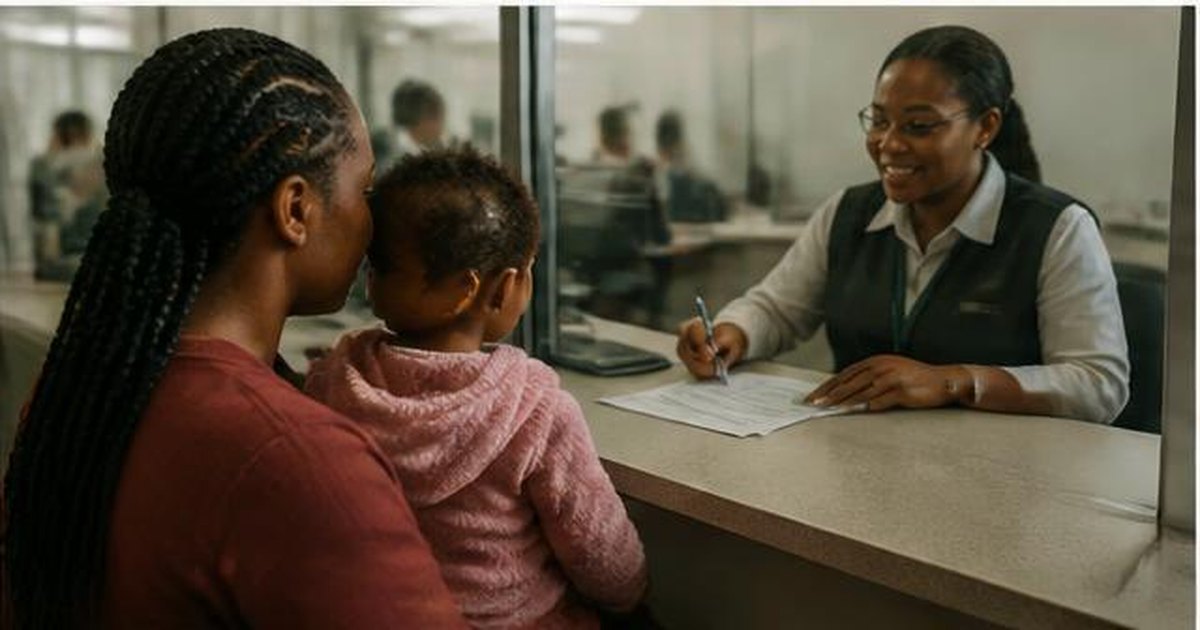
The application form must be completed in the presence of a SASSA official — you can't simply drop off a self-completed form, and it's designed this way to prevent fraudulent applications. If you're too unwell to travel, a family member or friend can apply on your behalf, provided they bring a letter from you authorising them to do so.
Step 3: Complete the Form and Submit Your Documents
A SASSA official will help you complete the application form and check your supporting documents. Once everything is submitted, you'll be given a receipt — this is your only proof that you've applied, so keep it safe. You'll need it for any follow-up queries about your application's status.
Step 4: Wait for a Decision
Processing can take up to three months. If your application is approved, payment is backdated to the date you applied — not the date of approval — so you don't lose out financially for the time spent waiting. You'll be notified by SMS or in writing once a decision has been made.
Step 5: Receive Your Payments
If approved, payments are made through one of the following methods:
- Directly into a bank account
- A SASSA payment card
- Cash collection at a designated pay point
You can check your application status at any time on the SASSA website (sassa.gov.za) using your ID number and the phone number registered with your application.
Applying Online
SASSA also offers an online application channel through its official website, which includes generating and printing a required affidavit for certification by a Commissioner of Oaths, completing a bank payment form, and uploading certified copies of your supporting documents in PDF format. The application process itself is free — you should never be asked to pay a fee to apply for or receive a SASSA grant, whether in person or online. If anyone asks you for payment to "process" your application, that's a scam.
What Can Suspend or End the Grant
Once approved, a few things can affect your ongoing payment:
- If you receive payments through a bank, institution, or a procurator (someone managing the funds on your behalf), you're typically required to complete a life certificate for the child at a SASSA office every year, confirming the child is still alive and in your care.
- The grant can be suspended if your circumstances change in a way that affects eligibility — for example, if the child moves into a state institution, or if your income rises above the means test threshold and this isn't reported.
- You're expected to inform SASSA of relevant changes to your income or circumstances rather than waiting for a review to catch it.
FAQ
How much is the Child Support Grant? R580 per child per month, effective from April 2026, with a R290 top-up available to qualifying beneficiaries. This figure is reviewed and typically adjusted annually, so confirm the current amount with SASSA before applying.
Who can apply for the Child Support Grant? Any primary caregiver of a child under 18 — not necessarily a biological parent. Grandparents, other relatives, or any adult with primary day-to-day responsibility for the child's care can apply, provided they and the child live in South Africa and they meet the citizenship/residency and means test requirements.
What is the means test, and what's the income limit? It's an assessment SASSA uses to check your income (and your spouse's, if married) against published thresholds to determine eligibility. Current thresholds have varied slightly across 2026 SASSA communications, generally in the region of R5,000–R5,600 per month for single caregivers and roughly double for married couples' combined income — confirm the exact current figure with SASSA before applying, since this is not an asset test, only an income test.
Where do I apply? At your nearest SASSA office. The application form must be completed in the presence of a SASSA official — it can't be submitted as a pre-filled form dropped off separately. You can also apply through SASSA's official online application channel.
What if I don't have an ID or the child's birth certificate? You can still apply. SASSA will accept an affidavit (on their standard format, sworn before a Commissioner of Oaths who isn't a SASSA official), a sworn statement from a trusted community figure who knows you and the child, or proof that you've applied for the missing document at Home Affairs.
How many non-biological children can I claim for? Up to six children who are not your biological or legally adopted children. This limit doesn't apply to your own biological or legally adopted children.
How long does the application take to process? Up to three months. If approved, your payment is backdated to your original application date, so you don't lose the benefit for the time spent waiting.
How will I be paid? Into a bank account, via a SASSA payment card, or by cash collection at a designated pay point, depending on what you select or what's available in your area.
Does it cost anything to apply? No. Applying for a SASSA grant is completely free. Anyone asking you to pay a fee to apply or to "speed up" your application is attempting to defraud you.
Do I need to do anything to keep the grant active each year? If you receive payments through a bank, institution, or procurator, you're generally required to submit a life certificate for the child annually at a SASSA office, confirming the child is alive and still in your care.
Can I apply if I'm too sick to travel to a SASSA office? Yes. A family member or friend can apply on your behalf, provided you give them a signed letter authorising them to do so.
Can the grant be stopped? Yes — for example, if the child is placed in a state institution, if your income rises above the means test threshold and isn't reported, or if required annual verification (such as a life certificate) isn't completed.
Sources
- Social Assistance Act 13 of 2004
- South African Government, "Child support grant" — gov.za
- Western Cape Government, "SASSA Child support grant" — westerncape.gov.za
- South African Social Security Agency (SASSA) — sassa.gov.za, and Contact Centre 0800 60 10 10
This article is for general informational purposes and does not constitute legal advice. Grant amounts, income thresholds, and requirements are set and periodically updated by SASSA — confirm current figures at sassa.gov.za or your nearest SASSA office before applying.