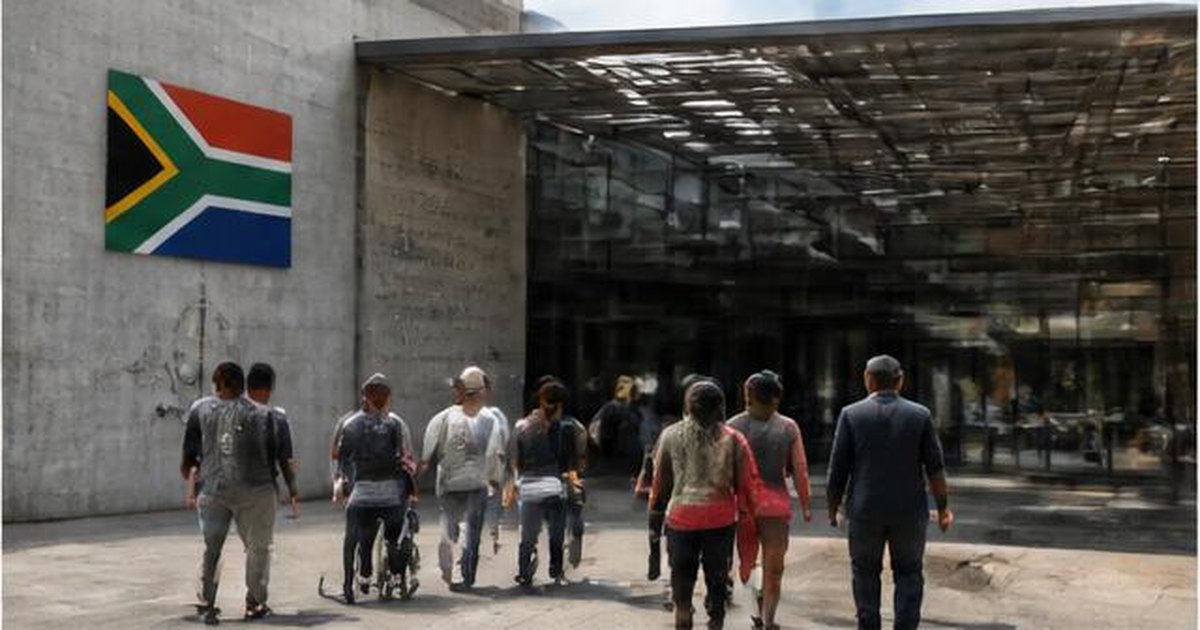
The South African Bill of Rights Explained in Plain English
The Bill of Rights is Chapter 2 of the Constitution of the Republic of South Africa, 1996. It runs from section 7 to section 39 and it is the part of the Constitution that most directly affects ordinary people's daily lives — at the clinic, at work, at a police station, at school, and when dealing with any government office.
This page gives you the full table of rights in plain English, plus a printable PDF version you can keep, share, or hand out at a community meeting.
Why the Bill of Rights matters when you deal with government
Every official you deal with — a Home Affairs clerk, a SASSA officer, a municipal cashier, a police officer — is bound by the Bill of Rights. Three sections come up constantly in admin disputes:
- Section 33 (just administrative action) — a decision that affects you must be lawful, reasonable and procedurally fair, and you can ask for written reasons. This is given effect by the Promotion of Administrative Justice Act 3 of 2000 (PAJA).
- Section 32 (access to information) — you can request records held by the state, and records held by a private body that you need to protect a right, using the Promotion of Access to Information Act 2 of 2000 (PAIA).
- Section 9 (equality) — you may not be treated differently because of your race, gender, disability, language, nationality of origin or any other listed ground.
If an office refuses to help you, ask for the refusal and the reason in writing. That single request converts a queue argument into an administrative-law question.
The rights are not absolute
Section 36 is the limitation clause. A right can be limited, but only by a law of general application and only where the limitation is reasonable and justifiable in an open and democratic society based on human dignity, equality and freedom. An office rule, a notice on a wall, or "that's our policy" is not a law of general application.
Section 37 deals with states of emergency. Even then, some rights can never be suspended, including the right to life, human dignity, freedom from torture and slavery, equality on the grounds of race and sex, and the core protections for children.
How to enforce a right
Section 38 says anyone may approach a competent court when a right in the Bill of Rights has been infringed or threatened — including acting on behalf of someone who cannot act for themselves, or in the public interest.
Practical, cheaper first steps before court:
- Complain in writing to the department, keeping proof of delivery and a reference number.
- South African Human Rights Commission (SAHRC) — free complaints process for human-rights violations.
- Public Protector — for maladministration, unfair conduct or abuse of power by state institutions.
- Legal Aid South Africa — free or subsidised legal representation if you qualify on means.
- Small Claims Court / Equality Court — the Equality Court hears unfair discrimination and hate-speech matters without a lawyer.
Rights you are most likely to use
- Arrested or detained (s 35) — you have the right to remain silent, to be told why you are being held, to a lawyer, to be brought before a court within 48 hours, and to reasonable conditions of detention.
- Housing (s 26) — nobody may be evicted from their home or have their home demolished without a court order made after considering all the relevant circumstances.
- Health care (s 27) — no one may be refused emergency medical treatment.
- Education (s 29) — everyone has the right to a basic education, including adult basic education.
- Labour (s 23) — fair labour practices, the right to join a trade union, and the right to strike.
- Children (s 28) — in every matter concerning a child, the child's best interests are of paramount importance.
References
- Constitution of the Republic of South Africa, 1996 — Chapter 2 (Bill of Rights): gov.za
- Full Constitution, Department of Justice: justice.gov.za
- South African Human Rights Commission: sahrc.org.za
- Public Protector South Africa: pprotect.org
- Legal Aid South Africa: legal-aid.co.za
- Promotion of Access to Information Act 2 of 2000 (PAIA) and Promotion of Administrative Justice Act 3 of 2000 (PAJA)
This is an independent plain-English summary and not legal advice. Always read the wording of the Constitution itself, or get legal help, before relying on a right in a dispute.